
Inspired by our hiking small groups at PCTC, Pastor Julie Delezenne wrote a 12-month hiking devotional to be used by small groups or individuals embarking on hikes in Northern Michigan (or similar climates!). Begin your hike by reading the devotional and closing prayer together and continue with one or more of the listed “practices” during the hike. Suggested hikes listed connect with the theme of the month (but are only suggestions!). May God bless your journey in God’s wonder-full creation.
April: Woodpeckers
Suggested Hikes:
Old Mission Point Park
Killingsworth Park
Our family tries to go hiking every weekend together. We’ve been doing this since the boys were little. When we were downstate, we took advantage of the wonderful Metropark system in Southeast Michigan. One of our favorite hikes was around a small lake near the nature center at Kensington Metropark. It was a beautiful 2 mile loop, but what made it really special were the birds. Along with the large cranes that would be walking the path with you, if you brought some bird seed, especially sunflower seeds, and held your hand out and were still for a few moments, you could have your own Snow White experience, with birds landing on your hand. One of our favorite birds that would land on our hands was the little Downy Woodpecker. If they stayed for a moment or two, you could feel the heat coming through their down. Like little hand warmers.
Our oldest, Isaac, really enjoyed this experience. A few times, he would strap a bag of seed across his shoulders with a makeshift piece of string. When he did this we called him Isaac Birdseed. Like Johnny Appleseed, Isaac Birdseed would share the seeds with the birds but also with other humans on the trail who didn’t remember to bring their own birdseed or who didn’t know about this magical experience ahead of time. He was intent on spreading the joy that this up-close connection with the birds brought him.
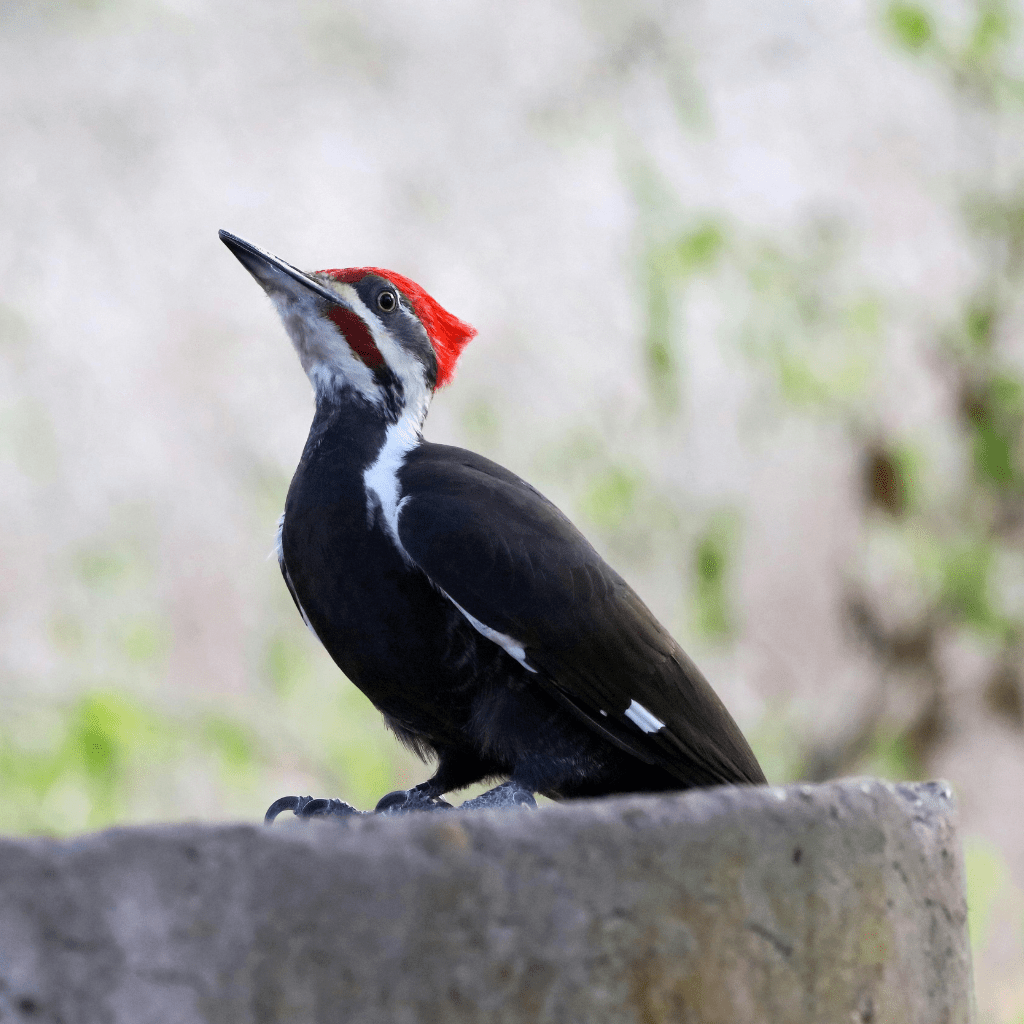
On our hikes through the woods here in Northern Michigan, it is often spotting a Pileated Woodpecker that brings us that joy. We often will hear them before seeing them. They are the largest woodpecker in our forests and their bright red heads and long sharp beaks make them easy to spot and identify. Even if we don’t see or hear them, we can spot where the woodpeckers have been in the area by the holes dug out of the trunks of dead trees.
Woodpeckers’ beaks can strike at wood at up to 15 miles per hour. Their beaks, skulls, and tongue muscles are designed to absorb the shock of those strikes. They peck the wood for a variety of reasons: to search for food (insects and grubs), to make a home, and to communicate with other woodpeckers.
For us on our hikes, the sound of the Pileated Woodpecker cutting through the forest brings us back to paying attention. It makes us stop and look and listen. The woodpecker awakens us to other sounds and movements in the forest. Their drumming helps awaken us to further joy.
During the Hike:
- Listen for the calls or drumming of the Pileated Woodpecker: https://www.allaboutbirds.org/guide/Pileated_Woodpecker/sounds
- Do you notice any holes in trees made by woodpeckers?
- Discuss with a hiking partner or ponder alone: What is it about hiking in the woods that brings you joy? What else is bringing you joy in your life these days? What are ways that you spread joy or others spread joy to you?
Prayer: Creator God, help us to listen for you in the trees today. May we find joy in the sounds of your creation: the crunch of leaves beneath our feet, animals waking up from winter hibernations, the sounds of woodpeckers and other birds going about the work and play you have called them to do. And when we return home after our hike, may we spread that joy with others. Amen.
Bibliography:
Collard III, Sneed B. Woodpeckers: Drilling Holes and Bagging Bugs. Bucking Horse Books, 2018.
 Presbyterian Church of Traverse City