
Inspired by our hiking small groups at PCTC, Pastor Julie Delezenne wrote a 12-month hiking devotional to be used by small groups or individuals embarking on hikes in Northern Michigan (or similar climates!). Begin your hike by reading the devotional and closing prayer together and continue with one or more of the listed “practices” during the hike. Suggested hikes listed connect with the theme of the month (but are only suggestions!). May God bless your journey in God’s wonder-full creation.
February
Nature and Mental Health
Suggested Hikes:
Grand Traverse Commons Natural Area
Mitchell Creek Meadows
The Lord is my shepherd, I shall not want.
He makes me lie down in green pastures;
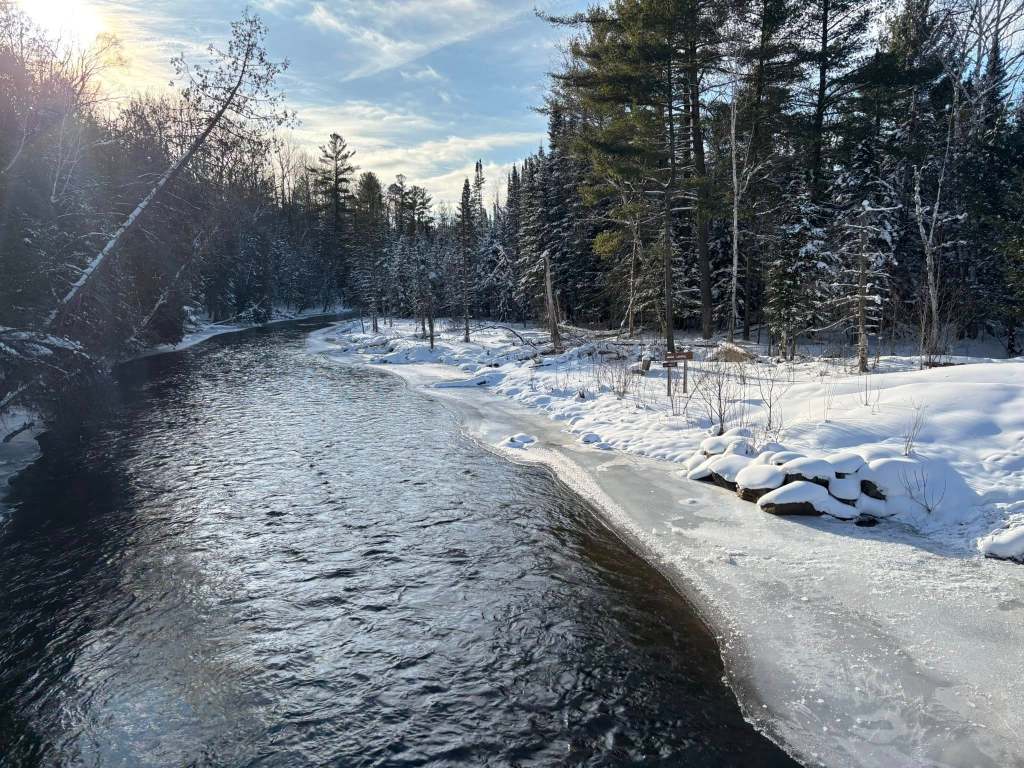
he leads me beside still waters;
he restores my soul. -Psalm 23:1-2
Perhaps Psalm 23 suggests that it is not only sheep who need green pastures and still waters for their souls to be restored. I imagine many of us are drawn out into the woods or beside the waters on those days we need our souls restored, our minds to be healed, our bodies to be relieved of the stress that we carry in day to day living.
Psychologists have been studying for decades the relationship between nature and mental health. Here in Northern Michigan, the Traverse City State Hospital (what had been known at one point as the Northern Michigan Asylum), served residents from surrounding counties struggling with a variety of mental illnesses from 1885-1989. Before the beginning of drug therapy in the 1950’s, the hospital’s philosophy was famously “beauty is therapy.” This idea stemmed not only from the first Superintendent, Dr. James Munson, but also from Thomas Kirkbride, the designer and architect of the Asylym. Influenced from his Quaker background, Kirkbride was not only an architect, but also a physician.
In 1842, he wrote down his ideas about caring for those with mental illness and what the grounds of asylums should and could be in order to engender healing. He wrote: “It should never be forgotten that every object of interest that has been placed in or about a hospital for the insane, that every flower tree that buds, that every flower that blooms may contribute in its small measure, to excite a new train of thought and perhaps be the first steps toward bringing back to reason the morbid wanderings of the disoriented mind.”
Whether we suffer from mental illness or not, exposure to nature has been linked to helping us in many ways: increased attention, decreased stress, better moods, reduced risk of psychiatric disorders, and even greater empathy and cooperation with others.
The green pastures, still waters, forests, and sand dunes might not solve our problems, but when we take some time to be immersed in them, perhaps we might come away with a renewed perspective to all it is we are carrying.
During the Hike:
- Take a moment at the start of the hike to assess how you are doing today. What are you “carrying” that feels heavy? What things feel “unresolved” in your life right now? At the end of your hike, take a moment to check in with yourself: does anything feel different? What new insights might I have gained on this hike? What might feel more manageable returning from my hike?
- Discuss with a hiking partner or ponder alone: When has nature helped to heal you? What types of places (rivers, lakes, fields, forests) do you find yourself drawn to most when you need to destress?
Prayer:
Creator God, your beauty surrounds us. It helps us feel at peace, more connected to you and even to ourselves. Restore our souls with the beauty of your world so that we too might be a healing and loving part of your creation. Amen.
Bibliography:
Anderson, Jordan, host. “Beauty is Therapy.” The Grand Traverse Look Back, Episode 5, Traverse Area Historical Society, March 2023. https://www.traversehistory.org/podcast
 Presbyterian Church of Traverse City